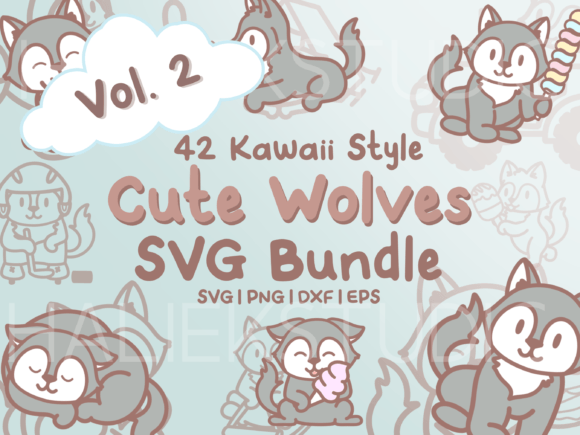
Cute Wolves Vol. 2: An Embroidery Review
As a professional embroidery digitizer and product reviewer, I approach every new graphic collection with a specific question: will this actually stitch out cleanly on fabric? When evaluating Cute Wolves Vol. 2 SVG Illustrations, my focus shifts immediately from screen aesthetics to needle performance. This collection of 42 illustrations offers a charming aesthetic that appeals strongly to the current market for cozy, woodland-inspired goods. However, translating these digital graphics into a successful machine embroidery design requires understanding how their inherent style interacts with thread, tension, and fabric texture.
First Impressions: Whimsy Meets Stitch Logic
Upon opening the files, the visual personality of Cute Wolves Vol. 2 SVG Illustrations is undeniable. The artwork leans heavily into soft curves, expressive faces, and playful scenarios rather than realistic anatomical accuracy. For an embroiderer, this is excellent news. Stylized art typically translates better to stitching than photorealistic images because it relies on distinct shapes and bold lines rather than subtle shading gradients that can become muddy in thread.
The mood created by these graphics is inherently warm and approachable. They do not feel aggressive or overly complex, which makes them ideal candidates for personalized gifts and children’s apparel. From a technical standpoint, the line work appears consistent enough to serve as reliable guides for both satin stitch borders and fill stitch areas. The "cute wolfy things" theme suggests dynamic poses, but crucially, they seem contained within manageable boundaries, reducing the risk of registration issues common in sprawling designs.
Real-World Application: The Custom Sweatshirt Test
To truly judge the viability of these illustrations, I mentally placed them in a real production scenario: creating a custom embroidered sweatshirt for a boutique holiday collection. Sweatshirts are a staple for Etsy sellers and small shop products, but fleece and French terry fabrics present unique challenges due to their pile and stretch.
In this context, Cute Wolves Vol. 2 SVG Illustrations would likely perform best as a center chest placement or a smaller left-chest motif. If I were digitizing one of the wolves holding a seasonal item, I would prioritize clear separation between the wolf’s body and the accessory. On textured fleece, fine details can get lost. Therefore, I would advise using these graphics as applique designs where possible. Using fabric for the main body of the wolf reduces stitch density significantly, preventing the "bulletproof" stiff feeling that ruins the drape of a cozy garment. The remaining details—eyes, nose, paws—could then be rendered in running stitches or light satin columns that sit crisply on top of the applique without sinking into the fabric nap.
For a tote bag design, the application changes. Canvas is stable and forgiving. Here, you could utilize more intricate elements of the illustrations, perhaps combining two or three wolves to create a narrative scene. The sturdy nature of canvas supports higher stitch counts, allowing for richer fill textures that mimic the original artwork’s depth without fear of puckering.
Navigating Fabric Limitations and Hoop Constraints
While versatile, these illustrations require careful placement decisions based on the substrate. Not every surface is friendly to cute wildlife art.
- Stretchy Fabrics: When using these for baby embroidery on onesies or knit caps, stabilization is non-negotiable. The organic shapes of the wolves may distort if the fabric shifts. Use a cut-away stabilizer and consider a water-soluble topping to keep stitches defined.
- Dark Fabrics: Many of these illustrations likely rely on lighter tones for facial expressions. On black or navy garments, ensure your digitized version includes adequate underlay or white base layers so the character’s expression doesn’t disappear against the background.
- Curved Surfaces: For caps or sleeves, select illustrations from the collection that have a vertical or compact orientation. Wide, horizontal wolf poses often distort on curved hoops. You may need to resize or rotate specific graphics to fit the safe zone of a cap frame.
- Frequent Washing: Items like tea towels or baby blankets endure harsh laundering. Avoid tiny detached elements (like floating hearts or stars) that might snag. Ensure all running stitch outlines are securely anchored at start and end points.
Impact on Product Value and Brand Perception
Using high-quality source material like Cute Wolves Vol. 2 SVG Illustrations directly influences customer trust. In the saturated market of handmade products, buyers can distinguish between generic clip art and thoughtful design. These illustrations possess a cohesive artistic voice that helps build brand consistency. Whether you are selling finished custom apparel or digital assets, maintaining this visual standard signals professionalism.
Furthermore, the variety within the 42-piece set allows for product line expansion. You aren't limited to a single pose. You can create matching sets—a mama wolf for a sweatshirt and a pup for a matching bib—which increases average order value. For commercial embroidery businesses, having a library of themed graphics that stitch out reliably saves digitizing time and reduces test-stitch waste, directly improving profit margins.
Essential Designer Notes Before You Stitch
Before loading these graphics into your software or sending them to production, adhere to these practical checkpoints to ensure success:
- Verify Licensing: Always confirm the specific license terms for Cute Wolves Vol. 2 SVG Illustrations. Determine if you are cleared for commercial use on finished physical products versus digital redistribution. Never assume; check the provider's documentation.
- Test on Scrap Fabric: Never run a new design on a final product first. Test on a scrap of the exact fabric and stabilizer combination you intend to use. Check for puckering, thread breaks, and detail clarity.
- Check Thread Contrast: View your color separation in grayscale or simulate it in software. Ensure the wolf’s features remain distinct. Low contrast between the subject and the garment can make even beautiful embroidery look flat.
- Evaluate Size Limits: Do not arbitrarily shrink these illustrations below their recommended minimum size. Small details like eyes or whiskers may turn into thread blobs if reduced too much. Respect the integrity of the original art.
- Create Mockups: Use printable mockup templates to visualize placement before stitching. This helps verify scale relative to the garment size, especially for youth sizes where proportions differ drastically from adult apparel.
- Inspect Corner Details: Sharp corners in vector art can sometimes cause needle penetration issues or fraying in embroidery. Slightly rounding off sharp angles during the digitizing process can result in cleaner satin stitch edges.
Final Thoughts for Makers and Sellers
Cute Wolves Vol. 2 SVG Illustrations represents a strong foundation for a wide array of embroidery projects. Its charm lies in its adaptability; it works equally well for a rustic nursery pillow and a trendy teen hoodie. However, the transition from digital illustration to tactile embroidered patch or garment decoration demands respect for the medium. By treating these graphics as blueprints rather than finished products, and by applying sound stabilization and digitizing principles, you can elevate this collection into profitable, professional-grade merchandise. Remember that the value of any embroidery file is ultimately determined by the quality of the finished stitch-out, so take the time to test, adjust, and refine. Your customers will appreciate the difference between a quick print and a carefully crafted textile creation.